
Please see the physical analysi
Obviously, the safest bicycle helmets are equipped with some anti rotation impact technology, and rotation impact is the main cause of concussion, which can be seen from the independent test results of helmets released by Virginia Tech.
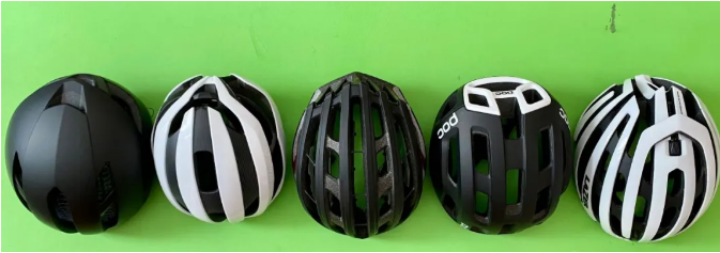
The helmets from left to right are:Bontrager XXX WaveCel、Bontrager Velocis Mips、Specialized S-Works Prevail II Vent、POC Ventral Air WF Spin、Lazer Z1。
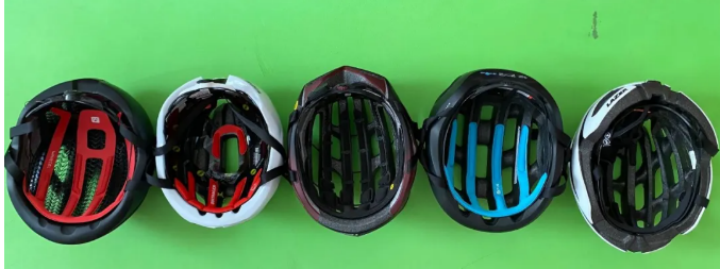
hey use wavecel and MIPS respectively Evolve, MIPs air, spin technology, and Lazer Z1 on the far right does not use any anti rotation impact technology.
When it comes to helmet safety test standards, there are many at the same time, including CPSC 1203 and en 1078, which are American and European standards, and the American standards are correspondingly higher. There are also national standards, because most helmets are produced domestically and most are exported, so the safety standards are also relatively high. We won’t talk about the test standards of helmets. Today we mainly show you several helmets using different anti rotation impact technologies.
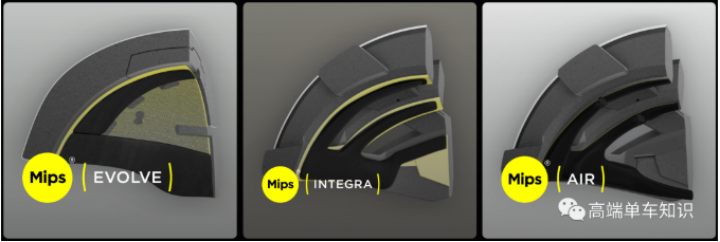
Among the top 30 helmet tests of Virginia Tech, except for a mountain helmet, all the others used some anti rotation impact technology. MIPS is still the most popular because it is open and can be purchased at a cost. The second is the unique wavecel of Bontrager and POC’s own spin.
MIPS and spin are actually quite similar, because the principle of reducing rotational impact is very simple, that is, adding a sliding layer between the helmet and the head. If there is no patent protection, it is too easy to imitate. In fact, MIPs and spin have had patent disputes, which have been settled now.
一、WaveCel
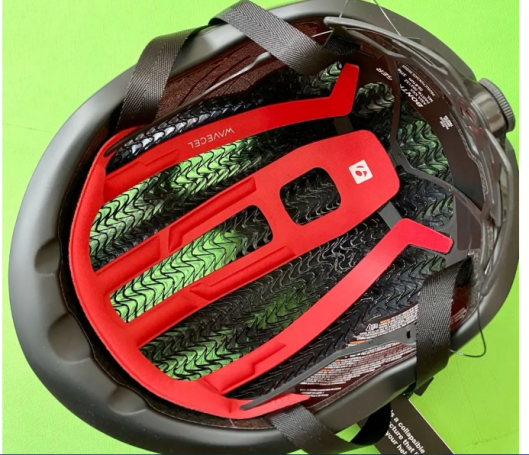
Unlike MIPs, wavecel is a 1mm thick low resistance sliding layer, but a honeycomb structure that can be compressed, folded and sliding.
Bontrager’s wavecel is a much more complex technology. Wavecel was developed by two brain trauma experts. The honeycomb wavecel is located in the helmet shell. The wavecel layer is designed to “bend, wrinkle and slide”, which can prevent impact from various angles. The honeycomb structure can be divided into the above three stages to disperse the impact force and provide a buffer when any impact force reaches your head. Compared with MIPS and spin, which are mainly used for rotational impact, wavecel is designed to resist all types of impact. So we can imagine that WaveCel is equivalent to the EPS foam with a thickened helmet. The safety of the bicycle helmet is due to the EPS foam. Of course, the outer surface will cover the beautiful polycarbonate shell, and the high-end helmet will increase the inner skeleton of the foam to prevent the impact. Anti rotation impact technology is just adding flowers on the scene, which can improve safety, but can not replace the role of EPS foam. Therefore, those helmets that do not use anti rotation impact technology are not unsafe. Wavecel is unique, but under the existing test standards, it does not score higher than MIPs, and increases the weight and hinders the airflow. Therefore, Bontrager also has MIPS helmets.
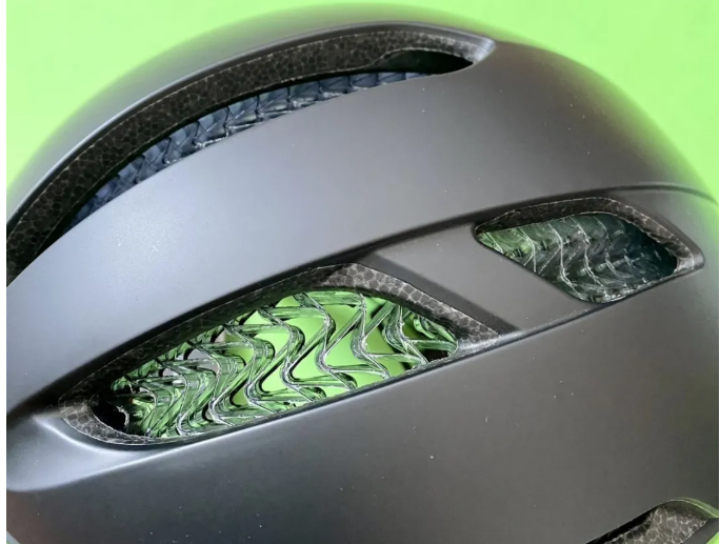
The picture can clearly see the structure of wavecel, which is still very thick.
二、MIPS
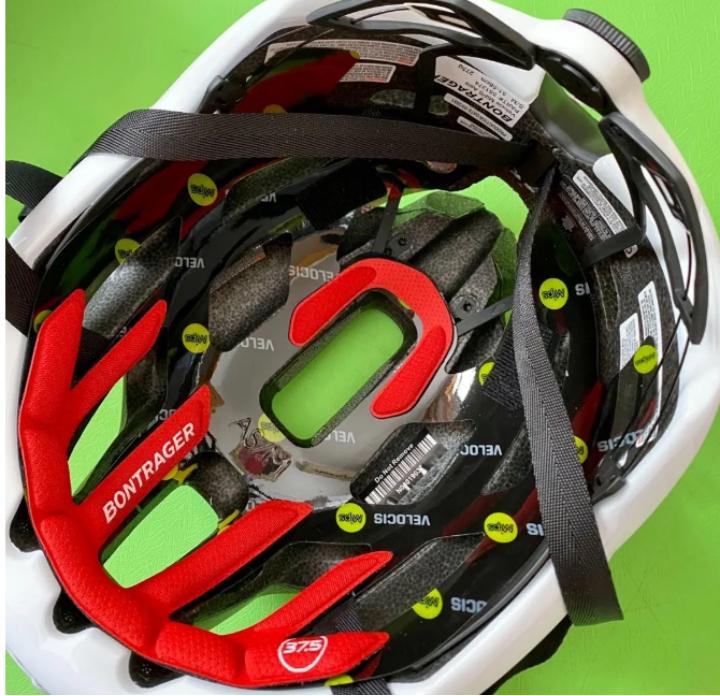
MIPS is essentially the sliding “plastic shell” inside the helmet, which is anchored to the helmet through rubber strips. It is smooth and has low friction, so it can slide in any direction relative to the helmet.Very thin and slippery plastic bushing.
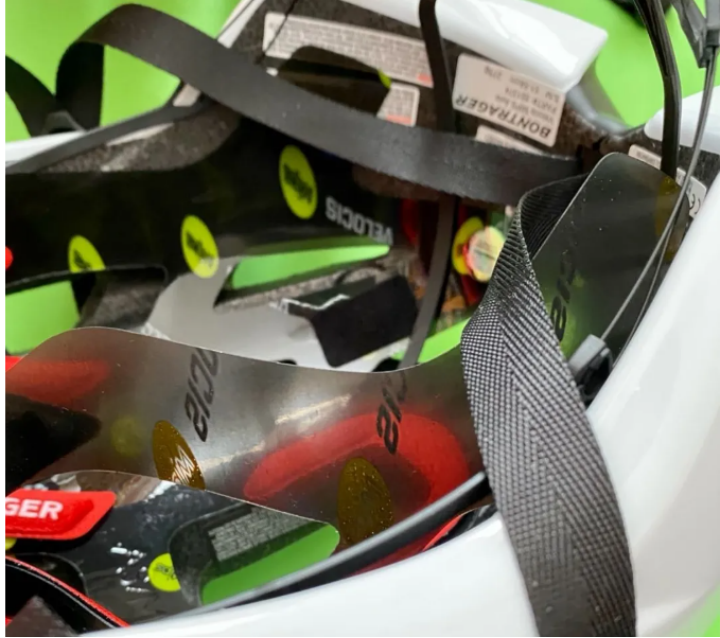
The very thin and slippery plastic liner is anchored to the helmet through elastic rubber strips, so the liner can slide freely
MIPS recently renamed their products to make it easier to distinguish the performance of different protection levels. At the same time, MIPs has also released a MIPS Integra system, which is essentially integrated with the helmet. For the time being, there is no bicycle helmet. MIPS air, evolve and essential are new names that point out the main features of these systems. Essential is the most basic protection system, but at the expense of weight and breathability. Evolve is very suitable for bicycle helmets, just like the relationship between bread and butter. It provides a good fit, light weight and ventilation. Bontrager velocis in this exhibition uses it. Air Gang is a new and lightest system. It uses sliding pads in the helmet and is fixed by elastic rubber anchors to provide the best ventilation performance. It is used by s-works preview II vent in this exhibition.
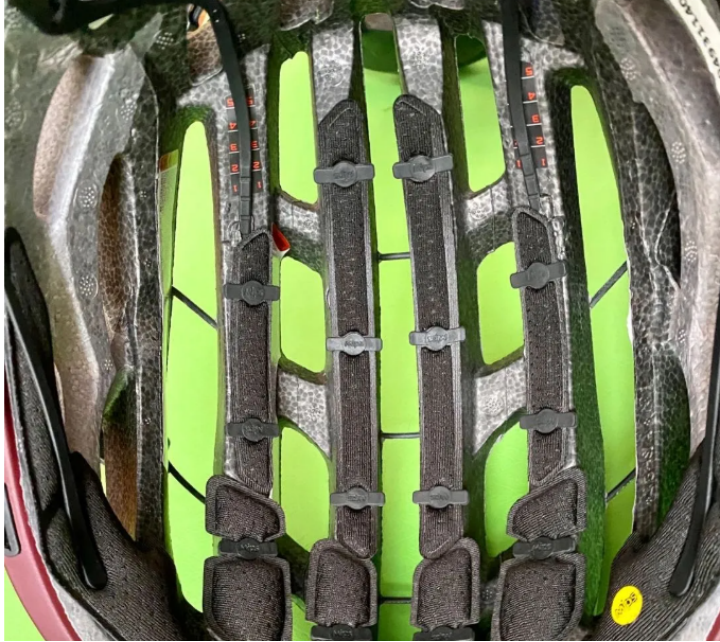
S-works preview II vent focuses on ventilation, so it uses the new MIPS air technology. It can be seen that there is no plastic shell inside the helmet, only some sliding pads. They are bonded to the inside of the helmet through rubber anchors, which looks like a helmet without anti rotation impact technology.
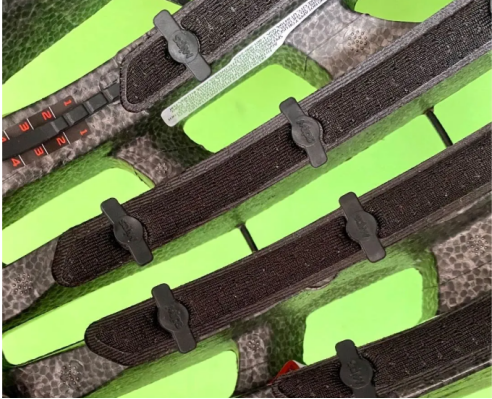
The words MIPS on the rubber anchor prove that it is the patent of MIPs
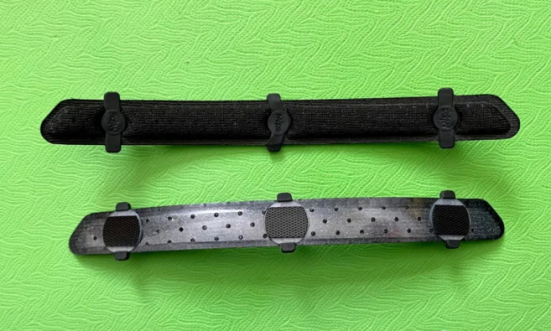
The rubber anchor has the words MIPs, which proves that it is dedicated to MIPs. This photo of the pad can explain their principle. The back side of the pad is a low resistance layer, which is bonded to the helmet through the rubber anchor. The friction between the rubber anchor and the pad is very low, so it can slide freely for 10-15mm,
三、SPIN
The concept of spin is simple and subtle. The silicone pad inside the helmet eliminates the hard contact between the head and the helmet, and absorbs the impact force from any direction through the sliding of the silicone pad.
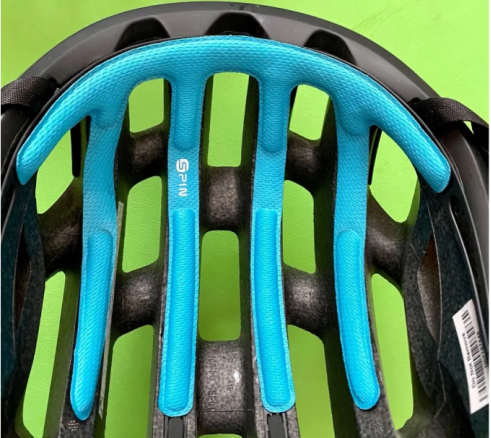
POC At a glance, the ventral air WF spin is similar to the interior of an ordinary helmet, except for the blue spin pad.
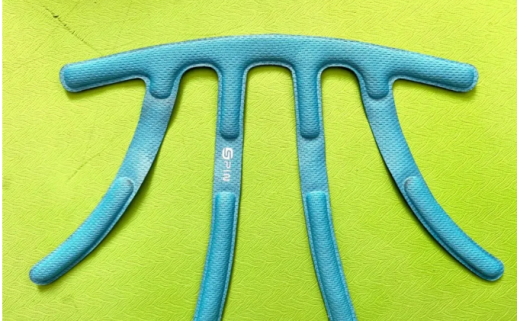
You may not expect that spin works on the helmet pad. The difference from the ordinary pad is that it has a silicone layer inside, so it can slide and increase some comfort.
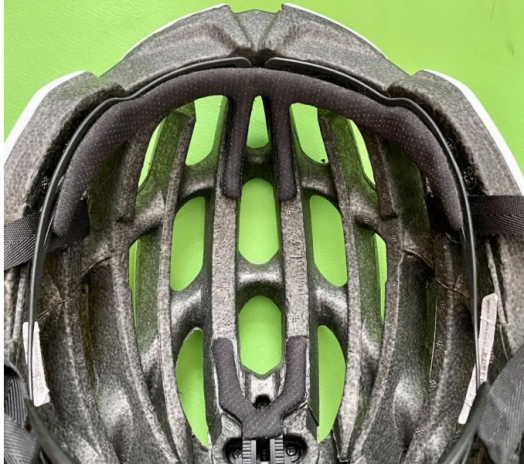
Lazer Z1 without rotating impact protection technology has only sponge pad inside the helmet. Of course, this helmet has also passed CPCs certification, which is also safe enough to be used safely.Although the principle of the anti rotation impact technology used in the helmet is very simple, MIPs also makes a lot of money through patents.
Finally put on the helmet weight:
- ontrager WaveCel XXX M / l-385g
- Bontrager Velocis Mips S / m-277g
- Specialized S-Works Prevail II Vent M-252g
- POC Ventral Air WF Spin M-267g
- Lazer Z1 l-266g
Post time: Aug-23-2021


